Tuesday, 20 June 2017

Southeast Asian Folk Arts

Tunku abd rahman.jpg
The songkok or peci or kopiah is a cap widely worn in Indonesia, Brunei, Malaysia, Singapore, the southern Philippines and southern Thailand, mostly among Muslim males. It has the shape of a truncated cone, usually made of black or embroidered felt, cotton or velvet. It is also worn by males in formal situations such as wedding feasts, funerals or festive occasions such as the Muslim Eid ul-Fitr and Eid al-Adha. Songkok came to be associated with Islam in Brunei, Malaysia, Singapore, Thailand and the Philippines, while in Indonesia the peci can also be associated with the nationalist secular movement. 

Batik (Javanese pronunciation: [ˈbateʔ]; Indonesian: [ˈbatɪk]) is a technique of wax-resist dyeing applied to whole cloth, or cloth made using this technique. Batik is made either by drawing dots and lines of the resist with a spouted tool called a canting (Javanese pronunciation: [ʈ͡ʂantiŋ], also spelled tjanting), or by printing the resist with a copper stamp called a cap (Javanese pronunciation: [ʈ͡ʂap], also spelled tjap). The applied wax resists dyes and therefore allows the artisan to colour selectively by soaking the cloth in one colour, removing the wax with boiling water, and repeating if multiple colours are desired. 
Wau bulan (Jawi: واو بولن) is an intricately designed Malaysian moon-kite (normally with floral motifs) that is traditionally flown by men in the Malaysian state of Kelantan. It is one of Malaysia's national symbols, some others being the kris and hibiscus. The reverse side of the fifty-cent coin of Malaysia (1989 series) features an intricately decorated wau bulan with a hummer on top.[1]The logo of Malaysia Airlines (MAS) is based on the wau kucing (cat kite). There are many types of wau in Malaysia, each with its own specialty. Wau kucing (cat kite) and wau merak (peacock kite) are some of the variants. 
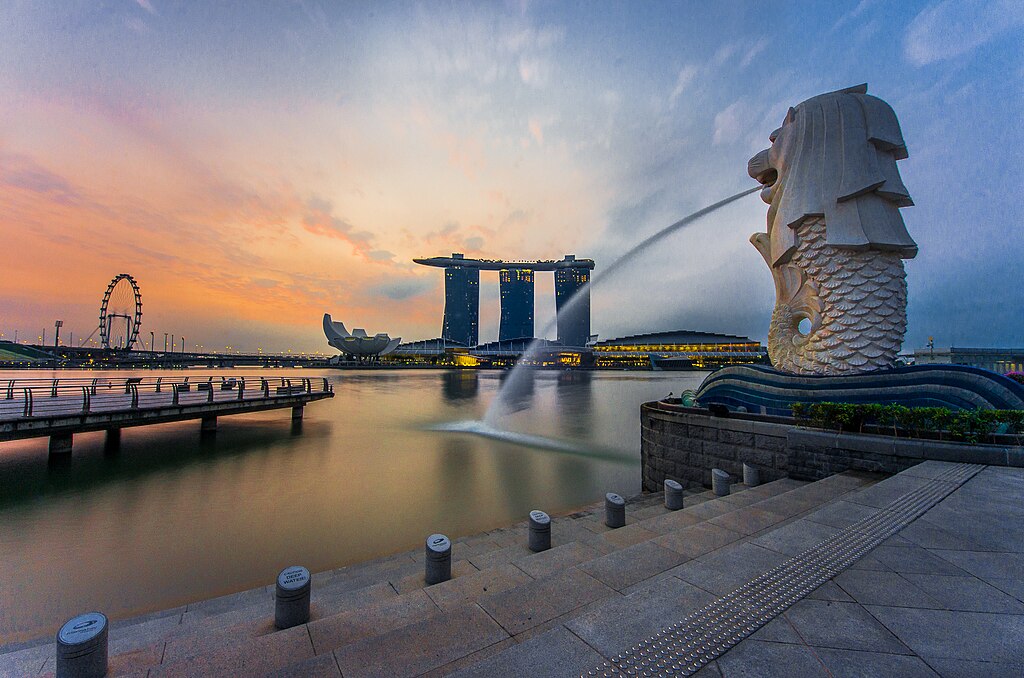
The Merlion (Malay: Singa-Laut) is a well-known marketing icon of Singapore depicted as a mythical creature with a lion's head and the body of a fish. It is widely used as a mascot and national personification of Singapore.

The Merlion was first used in Singapore as the logo for the tourism board. The Merlion is similar to the heraldic sea-lion which occurs in a number of different artistic traditions. 
A Bulul is a carved wooden figure used to guard the rice crop by the Igorot peoples of northern Luzon. The sculptures are highly stylized representations of ancestors, and are thought to gain power from the presence of the ancestral spirit. The Ifugao are particularly noted for their skill in carving bululs

Sunday, 18 June 2017

Grade 8 Arts first quarter Lesson 1 PART 1 arts and crafts of Thailand, Cambodia and Laos and Vietnam


Thailand's SKY LANTERN FESTIVAL

Flying lanterns are made out of rice paper with bamboo frames, which contains fuel cell or small candle. When the candle or fuel cell is lighted the flame heats up the air inside the sky lantern making it float.

In Thailand, flying lanterns are used in the Loy Krathong festival. This is the festival held in the night of the 12th moon usually in November and believe to have the brightest and most spectacular celebrations.

Wander down to the beach on most nights and you will find locals selling wish lanterns for a small cost. Light your candle make your wish and once your wish lantern is floating skyward sit back and enjoy.


Cambodia and Laos

Indigenous people represent 1.4 percent of the total population in Cambodia and the majority of them live in remote rural areas within the country. Often referred to as highlanders, their ways of life are different from the lowlanders both from a cultural and economic perspective

Handicrafts are part of their traditional culture and their livelihood as they produce textiles, baskets, jars, pottery, and other tools for their daily use.

In this country, they make paper by hand in the wider region for over 700 years using the bark of the local SA or mulberry leaves. The bark is crushed and soaked in water until it dissolves into a paste and is place in a thin layer on a bamboo bed and dried in the sun.

Sa paper was used for calligraphy and for making festive temple decorations, umbrellas, fans, and kites and is now used for greeting cards, lampshades, bookmarks, and writing papers.

Grade 8 Arts first quarter Lesson 1 PART 2 Indonesia, Malaysia, Singapore and Brunei


Click here to know more about Batik

The most common to both countries is the BATIK, The term batik is an Indonesian-Malay word, believe to be related to the Malay word TITIK, which means point, dot, or drop. The drop refers to the process of dyeing the fabric by making use of a resist technique; covering areas of cloth with a dye resistant substance usually wax to prevent absorbing colors. The technique was taught thousand of years ago.

Two batik designs
1. geometric design - modern designs usually depend on the creativity of the designers
2. free form design - naturalistic motifs are leaves, flowers, birds

Malaysia and Singapore batiks produced
1. hand painted - the artist uses canting, a small copper container with one or more different sized pipes
2. block printed - done by wielding together strips of metal to form a metal block. The metal is dipped in molten wax and pressed against the fabric to make a pattern

In Singapore, Malaysia and Indonesia the batik is featured as the uniform of flight attendants for their official flag carrier airlines.


Leaves and flowers in Malaysian batiks are incorporated to avoid interpretation of human and animal idolatry., in accordance to their Islamic doctrine. This features look like to that of Indonesia


Brunei

thier traditional textile is also BATIK byut uniquely different from Indonesia, Malaysia and Singapore. Its designs have their national flower simpur, sumboi - sumboi (pitcher plant), air muleh

different techniques are used in Brunei's batik like airbrusing, cracking, bubble, rainbow, sprinkle, geometry, and marble. It used to make apply batik in different kinds of fabrics.

Batik can be done in four ways
1. hand drawn
2. using metal blocks
3. screen printing
4. digital printing


Thailand, Cambodian, Laos weaving Grade 8 First Quarter Lesson 1 PART 1

Thailand

Thai silk is produced from cocoons of the Thai silkworms. It is primarily originated in Khorat which it the heart of Thai's silk industry. The Thai weavers feed mulberry leaves to silkworms as their steady diet.


Cambodia

It is done as early as the first century since textiles are used for trading.

The 2 classification of Cambodian weaving
a. Ikat technique - to create patterns, the weavers tie and dye portions of the weft yarn before the weaving even begins. Patterns are diverse and vary by region: common motifs are lattice, stars and spots.

b. Uneven twill - it yields single or two color fabrics which are produced by weaving three threads so that the color of one thread dominates on one side of the fabric while two others determine the color of the other side of the textile

Uses of Cambodian weaivng

sampots - wrap skirts
pidan - pictorial tapestries
furnishing
exports for money
Krama - check scarf worn universally by Cambodians


Laos

Stories of their history were not passed on orally nor was it written, they were woven. Thread by thread Lao stories were weaved in the intricate dense patterns and motifs of cloth. Unfortunately, some are elaborately fantastic and motifs are so cryptic, that in many cases only the weavers can actually accurately interpret the story.

Shin - the Lao women's ankle long skirt whose form is undeniable but whose patterns are uniques to each skirt.

through the skirt simple and elegant She uses folk icons to express personal views. The symbols are crabs for resourcefulness, snakes for fertility, butterfly for beauty, birds for success and so on.

Vietnam

Golden thread silks were born in Vietnam. Many Vietnamese fabrics came from Ha Dong. the heart of the weaving and sericulture for centuries. Old looms are still used in weaving.

Some popular Vietnamese fabrics
1. shantung taffeta
2. bengaline weave
3. ebony satin


Tuesday, 9 May 2017

Wayang kulit

from Malaysia


https://en.wikipedia.org/wiki/Wayang_kulit#/media/File:Wayang_Pandawa.jpg


https://en.wikipedia.org/wiki/Wayang_kulit#/media/File:Making_of_a_Ringgit.jpg

Kulit - leather

Puppet - "Bayang" means imagination of spirit

Related image
https://www.flickr.com/photos/sigitdjatmiko/6238412348

Gamelan - accompanies wayang kulit

Perjuangkan Wayang Kulit, Dalang asal Cilacap Ini Jadi Caleg
http://politik.news.viva.co.id/news/read/482841-perjuangkan-wayang-kulit-dalang-asal-cilacap-ini-jadi-caleg


Dalang - chief performer who is accompanied by several instruments


https://en.wikipedia.org/wiki/Wayang_kulit#/media/File:Wayang_Kulit_in_Bali.jpg

https://en.wikipedia.org/wiki/Wayang_kulit#/media/File:Wayang_Kulit,_Bali.jpg

Holder  - buffalo horn

Shadow play is an invention of man reflects his experience of nature and of his thought

Gamelan - bronze percussion, augmented by other percussion instrument, strings and flute
a. Saron - xylophone of heavy bronze bar
b. Gender - bronze xxylophone with resonance chamber
c.Bonang - bronze bowls
d. Gong and Kampul - hanging gongs
e. Kenok and Ketuk - single inverted bronze bowl

Performance(https://en.wikipedia.org/wiki/Wayang_kulit

The stage of a wayang performance includes several components. 
it has a stretched linen canvas (kelir) acted as a canvas, dividing the dalang (puppeteer) and the spectator.
 A coconut-oil lamp (Javanese blencong or Balinese damar) – which in modern time usually replaced with electric light – casts shadow onto the screen.
 A banana trunk (Javanese gedebog, Balinese gedebong) lies on the ground between the screen and the dalang, where the figures are stick to hold them in place. 
To the right of the dalang sits the puppet chest, which the dalang uses as a drum during the performance, hitting it with a wooden mallet.
 In a Javanese wayang kulit performance, the dalang may use a cymbal-like percussion instrument at his feet to cue the musicians. 

The musicians sit behind the dalang in a gamelan orchestra setting. Gamelan orchestra is an integral part of the Javanese wayang kulit performance. The performance are accompanied with female singers (pesinden) and male singers (wirasuara).

The setting of the banana trunk on the ground and canvas on the sky symbolizes each the earth and the sky, the whole composition symbolizes the entire cosmos. When the dalang animates the puppet figures and moves it across the screen, divine forces are acting in his hands with which he directs the happening. The lamp is a symbol of the sun as well as the eye of the dalang.

A traditional wayang kulit performance begins after dark. 
The first of the three phases, in which the characters are introduced and the conflict is launched, lasts until midnight.
The battles and intrigues of the second phase are about three hours.
 The third phase of reconciliation and friendship is finished at dawn.

Wayang shadow plays are usually tales from the two major Hindu epics, the Ramayana and Mahabharata. The puppet master contextualizes stories from the plays, making them relevant to current community, national or global issues. Gamelan players respond to the direction of the Dalang.


thank you Wikipedia
thank you to the sources of the picture 

Nang shadow puppet of Thailand


Shadow puppet (Thai: Nang) was one form of public source of pastime or entertainment in South Thailand popular at festivals, temples, celebrations, like marriage.

Characters are made with leather carefully cut articulated shapes and delicately colored


Image result for NAI NANG

https://www.insightguides.com/inspire-me/blog/in-depth-performing-arts-of-thailand-

The puppets are carefully projected on a white sheet with lighting and manipulated with rods for movements

Performances

-It is performed during dry seasons FEBRUARY-AUGUST
-it tells about KARMA and REWARD and PUNISHMENT

-Ramayana epic story is used
-with specially written reflections, songs, poems, local events, current events
-Characters: clown, funny old man, scattered brained woman

Characters

god, queens, comedians, goddesses, and magical figures

Recites

-tales of gods, stories of love, current events and traditions
-Nang conflict, adventures, romantic tales, starcrossed, hermit teaching magic, abandoned seeking love

Nang Talung - leather puppets come as 50 cm high, pose a movable jointed arm, and controlled by strings

Nai Nang - teacher presenter of the nang Talung

Nang theater significance

it teaches values and ideologies in changing the world

IMAGES ARE BORROWED
THANK YOU FOR THE PHOTOS

 Guide questions

1. What term refers to the shadow puppets of Thailand?
2. What is Nang Talung?
3. Enumerate the characters of the shadow puppet of Thailand?
4. What is the leather puppet with a movable jointed arm?
5. Who presents the Nang Talung?
6. What is the significance of the shadow puppetry of Thailand?